
Begin with the facility use that has actually been agreed
Brier’s athletic-facility code describes City-form requests for park or athletic-facility use, seasonal scheduling and availability tied to field conditions. The observed chapter cites older ordinances through 2013. Confirm the current process and conditions with the City for the particular reservation; this is not a rule applied to every private property in Brier.
Identify the actual booked area, activity date and hours, including preparation and closing work. Ask which existing bathrooms participants may use and whether other groups share them. A reservation request or a facility name alone does not establish the complete sanitation arrangement.
Obtain a separate answer about equipment vehicle access
The same code confines motor vehicles to designated parking areas unless special-event permission and Public Works approval apply. That is a reason to discuss the proposed delivery and service route, not to assume a supplier may drive onto a field because participants have booked it.
After the City identifies acceptable access conditions, give them to the provider for equipment review. Check the entrance, surface, standing area and handling clearance. Visitor parking and pedestrian access are useful information, but neither proves that a loaded vehicle or later servicing operation is suitable.
Match the facilities to participants and the occupied hours
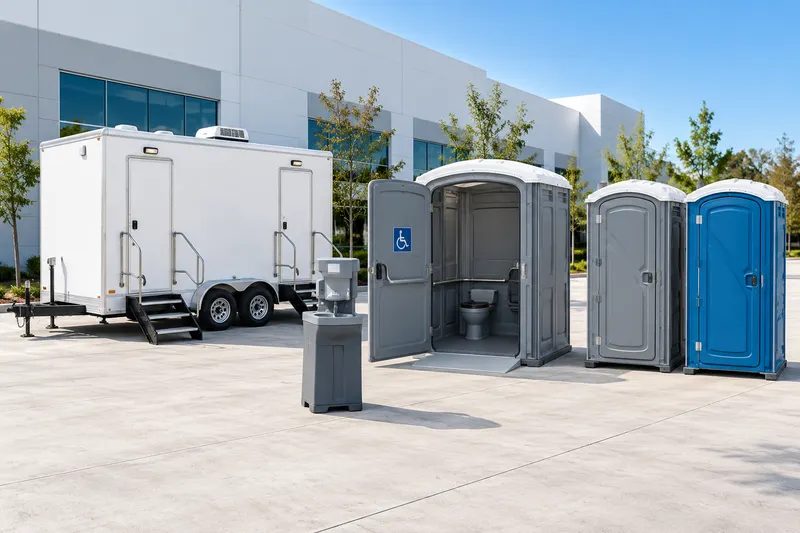
Standard portable toilets provide an enclosed toilet and waste storage for provider care. Discuss the people present together, spectators or helpers where relevant, and the usable permanent facilities. Include users present outside the main activity period rather than assuming everyone arrives and leaves at the same time.
Consider suitable accessible equipment and an unobstructed approach for the actual participants. Where washing is not otherwise available, discuss a station with water, soap, drying supplies and managed used water. Confirm any enhanced cabin features separately; do not infer a basin or particular entrance from a product category.
Protect the accepted position through the activity
Agree where users wait and how doors open without blocking paths or other booked areas. The position must also remain reachable for the service arrangement. Consider what changes when participants, sports equipment and parked vehicles occupy the facility, not just how it looks before setup.
Name the person who checks usability and reports missing supplies or damage. Ask which cleaning, tank care and restocking visits are included during the rental and how additional service is requested. Do not move equipment onto another part of the facility to solve a congestion problem without the appropriate agreement.
Agree what happens when the facility plan changes
Brier’s observed code allows City officials to close parks or facilities when necessary. That does not mean a closure is presently in force. Identify who receives an operator notice, informs the rental provider and discusses changes if the activity cannot proceed as planned.
Request clear terms for the actual equipment, rental dates, delivery, care, supplies and collection. Keep the approved access available until removal, or agree a changed pickup arrangement with both parties. A changed field booking does not automatically cancel or reschedule a separate rental order.
Questions before you book
Does a field reservation include permission for a toilet delivery vehicle?
Do not assume it. Confirm the City’s conditions for the actual equipment route, then have the provider assess the proposed access and position.
Does the code mean the park is closed now?
No. It describes authority and conditions under which facilities may close. Obtain the current position from the City for your activity.
Who should tell the rental provider about a changed activity date?
Name a responsible organizer in advance. That person should request revised rental and collection arrangements rather than assume the facility booking change updates the equipment order.