
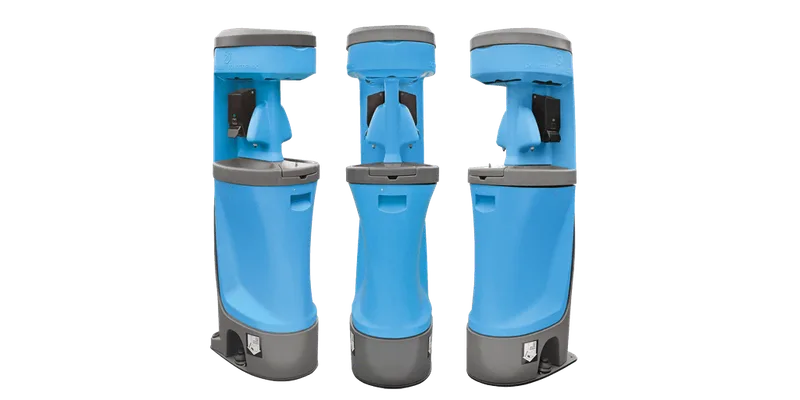
Identify what the offered station consumes and collects
Portable handwashing provides a water-and-soap washing function separate from a toilet cabin or sanitizer dispenser. Ask how the actual station is operated, where clean water comes from and how used water is retained or handled. Do not assume a particular tank capacity, heated-water feature, control type or utility connection.
Confirm which soap and drying supplies are provided and what replenishment requires. Tell the provider about the expected users, active hours and rental duration. If the request involves drinking water, dishwashing, tool cleaning or a specialist workplace function, separate it from ordinary handwashing instead of assuming one station is suitable for every task.
Assign responsibility before the first occupied shift
Agree who checks each supply and who performs or arranges replenishment. Identify the contact for an unusable control, missing consumable, water problem or used-water service need. Include a handover if the person responsible in the morning will not be present later.
Keep the site’s monitoring role distinct from provider cleaning and servicing. A check that a station is usable is not permission to open tanks, connect an unapproved hose or dispose of used water. Ask the provider which actions the site may undertake and which require an agreed visit.
Fit the care plan to periods when people actually use it
Describe shift overlap, event breaks or separate activity areas that may increase use. Ask whether the proposed supplies and service arrangement address that pattern. A scheduled visit does not imply unlimited refills between visits, and a long rental period does not establish a particular maintenance interval.
Give the responsible contact a way to report changing use before supplies become a recurring problem. If an additional crew arrives or another activity starts, review the care arrangement and equipment distribution with the provider. Do not attempt to solve an ongoing demand change by unapproved refilling or discharge.
Keep both the user approach and the service position workable
Place the station where intended users can reach it after restroom use or from the relevant work area without creating a bottleneck. Assess stable support, approach clearance and actual reach and operation of the controls. A nearby location is not enough if a person cannot use the station.
The provider also needs access for the care that has been agreed. Keep the station clear of cabin doors, queues, stored materials and unapproved moves. If it becomes unusable, report the condition and follow the agreed response; do not drain water onto the ground or into an unapproved drain to make space.
Make the washing tasks visible in the combined quote
When ordering alongside toilets, have the station identified separately with its initial supplies, cleaning, clean-water and used-water arrangements, replenishment responsibilities and rental dates. Confirm any permitted connection the offered model needs. A line naming equipment alone does not resolve who maintains it.
Include delivery and collection and the contact available for both. Keep the arrangement active through the last users, then let the agreed provider process handle removal and remaining water. This planning does not certify food-service or specialist compliance; check the actual activity’s requirements with the responsible authority.
Questions before you book
Who should refill water or replace supplies?
Agree that explicitly for the offered equipment. The site may monitor usability, but replenishment and used-water handling must follow the provider’s agreed responsibilities and instructions.
Can I assume a station will work throughout a long shift without attention?
No. Describe the expected use and confirm the supplies, checks and care plan. The equipment category does not establish capacity or a guaranteed interval between visits.
What should the next shift’s contact know?
Pass on the station position, any reported issue, the supply-check responsibilities and how to contact the person arranging provider care. Do not let a staff change leave those tasks unassigned.
Does hand sanitizer replace the station’s washing function?
A sanitizer dispenser is not a water-and-soap basin. Specify the function needed for the activity and confirm the equipment and supplies that provide it.