
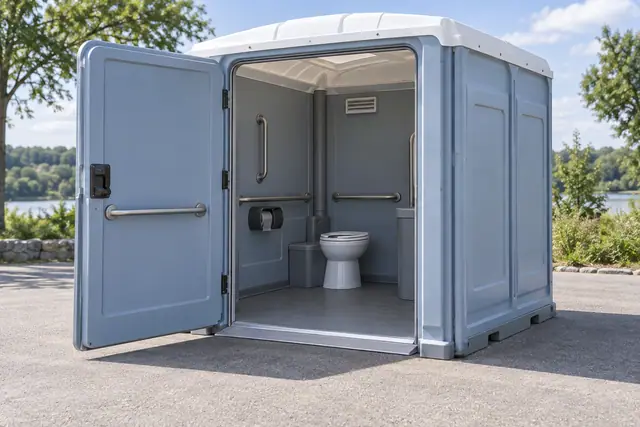
Describe the activities the arrangement must support
Explain whether expected users may use mobility aids, need assistance or have particular transfer or control-operating requirements. Ask for practical planning information, not diagnoses. Include the organizer or responsible site professional when identifying applicable accessibility requirements; this guide does not certify a venue.
Look beyond the toilet entrance. A person arriving from a different parking or gathering area may encounter a gate, a change of surface or a route that becomes obstructed during the event. Record those points on the site plan along with the hours during which the route must remain usable.
Identify what prevents the visit from working
At the approach, check stable support, changes in level and clear movement space. At the entrance, assess the actual door operation and space needed beside it. Inside the proposed model, have the relevant dimensions, transfer space and support features confirmed for the requirements being considered. Do not substitute the word wider for that information.
Washing is another activity to test, not an optional diagram symbol. Confirm whether users can reach and operate the proposed controls, obtain soap and dry their hands. A cabin that can be entered does not resolve an inaccessible separate washing point, and a sanitizer dispenser is not a water-and-soap basin.
Choose a combination that addresses the actual obstacle
A wider cabin, a unit specified for accessible use and an upgraded trailer are different proposals. Compare their confirmed features with the failed step in the visit. A trailer reached by steps is not an automatic alternative to an accessible cabin; any suitable alternative and its approach need separate assessment.
Sometimes the issue is the position rather than the product. Discuss a different approved standing area, a usable existing facility or suitable temporary equipment with the responsible parties. Do not improvise a ramp or relocate a delivered unit to make an unreviewed solution appear complete.
Protect usable space during the actual activity
Once a combination is accepted, identify who keeps its approach and door area clear. Seating, parked vehicles, stored materials and queues must not gradually occupy the space on which the decision depended. Include signs or route lighting in the organizer’s arrangements where needed rather than assuming the cabin provides them.
The provider also needs a workable route for cleaning, waste service and supplies. Explain the expected daily use and rental duration so care can be discussed. Plan visits without making the only usable approach unavailable at a critical time; report a blocked route or equipment problem through the agreed contact process.
Make the accepted arrangement specific enough to hand over
Record the proposed model, position, usable route, washing arrangement, dates and responsibilities in the rental discussion. Ask which cleaning, tank care and replenishment are included and how additional attention is requested. Include delivery and collection access, not just the period when guests are present.
If a route, user group or activity area changes, identify the affected step and ask for a review. A larger attendance may require a quantity discussion, while a closed gate may require another route or position. Those are different problems; neither is solved by assuming the original equipment label covers the change.
Questions before you book
Does a wider cabin prove the installation is accessible?
No. Confirm the actual model and assess the activities and route it must support. Width alone does not establish door operation, transfer space, washing access or the suitability of the site.
Can an upgraded restroom replace an accessible unit?
Only if its confirmed features and complete approach meet the actual requirements. Comfort features and accessible use are separate questions.
What should I report if the accessible route becomes blocked?
Identify the location and obstruction promptly to the site contact. Keep the access issue separate from equipment servicing so the responsible parties can arrange a suitable response.