
Revisit the activity, not just the attendance estimate
Monroe’s special-event guidance addresses gatherings outside ordinary use or with impacts on public spaces. Its examples include food trucks, inflatable equipment, performances, closures and detours. A park reservation alone should not be treated as the answer to every additional use.
Explain the proposed additions to the City or responsible venue contact and ask what coordination applies. These examples do not mean every food truck or performance follows identical requirements; they help describe how the activity differs from an ordinary reservation.
Identify which needs the changed activity creates
Consider new working groups as well as guests. Vendors setting up early, performers staying later or visitors spending longer at the site may need facilities outside the original public hours. Check whether the existing building bathrooms are available to each group.
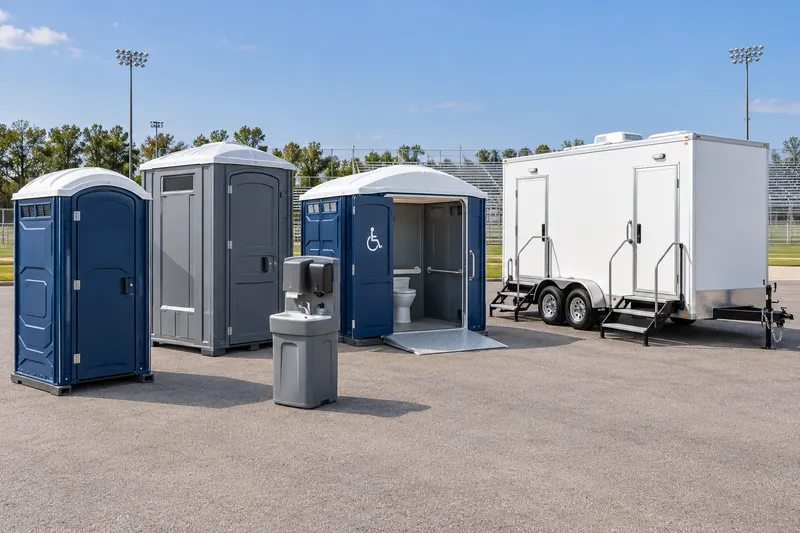
Standard portable toilets supply an independent private toilet with a holding tank. Discuss accessible facilities and a usable approach for the intended users. Add washing as a distinct function where necessary, confirming the station, water, soap and drying arrangements rather than assuming a basin inside every cabin.
Keep the new equipment from blocking the old routes
Show where vendors, staging, inflatables or traffic-control features will be located relative to toilets and queues. A position that was practical before those additions may obstruct movement or prevent a service vehicle reaching the facilities.
Agree the standing area and installation route with the property operator and supplier. Include accessible user routes and clear door space. Do not assume the rental team can pass through a closure or use a restricted area because it was accessible during an earlier visit.
Issue one revised set of rental details
Update the equipment request, dates, care needs and delivery or collection conditions together. Ask what the quotation covers for cleaning, waste servicing and supplies, including replenishment of washing equipment. Identify the person who can report problems during the activity.
Keep the latest accepted instructions with the receiving contact. A changed plan is not a confirmed change to the rental until it has been agreed, and later pickup may need separate venue permission. Include cleanup users and preserve access through collection.
Questions before you book
Does a park booking automatically cover all the attractions we add?
Do not assume it does. Monroe’s guidance identifies activities and impacts that may require special-event coordination. Explain the full revised proposal to the relevant contact.
Should we change the toilets whenever we add a vendor?
Reassess the people, duration, washing and layout first. Discuss the resulting need with the supplier rather than automatically adding or removing a unit.
What if equipment has already been quoted before the event changes?
Provide the updated activity, dates and access details and ask for the accepted scope to be reviewed. Keep the revised agreement with the person coordinating the site.